From Asset Spreadsheets to a Practical Maintenance Management Platform
In many energy companies, the true asset register lives in spreadsheets. One file tracks transformers, another lists substation equipment, a third holds inspection dates, and a supervisor somewhere keeps the only accurate record of which pumps were rebuilt last year. These tables were created with good intentions, often by people who knew the equipment better than anyone. Over time, however, they drift apart.
The consequences show up everywhere. Maintenance is scheduled for assets that were retired, critical equipment misses inspections, and engineers waste hours reconciling conflicting records before every planning meeting. Regulators and insurers ask for service histories that take days to assemble.
Moving from scattered tables to a unified maintenance platform is not just a software project. It is a data and ownership project, and success depends on getting the foundations right.
Why Spreadsheets Stop Working
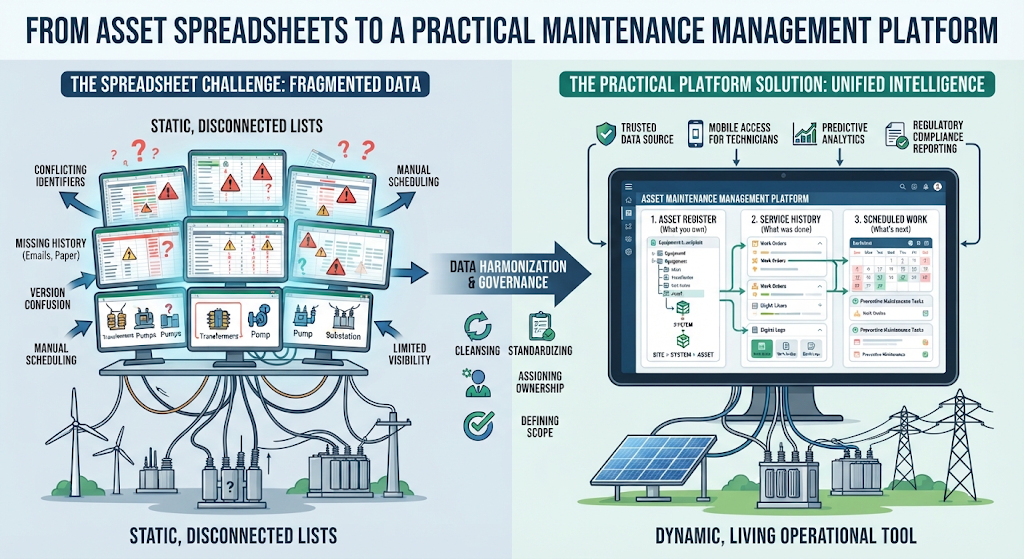
Spreadsheets are flexible, familiar, and cheap. They also struggle as operations grow. Common warning signs include:
- Conflicting identifiers, where the same transformer appears under different names in different files
- Missing history, with repairs recorded in emails, paper logs, or memory
- Version confusion, as teams edit copies rather than a single source
- Manual scheduling, where recurring work depends on someone remembering to check a date
- Limited visibility, making it hard to assess risk across the entire asset base
What a Practical Platform Should Combine
A useful maintenance platform brings three elements together: an asset register that defines what you own, a service history that records what has been done, and scheduled work that defines what must happen next. When these live in one system, planners can see condition, history, and upcoming tasks in a single view. This connected approach is the backbone of modern utility asset management, turning static lists into a living operational tool.
Energy companies making this shift often turn to partners experienced in energy software development, and seasoned builders usually start with data rather than features. According to a solution architect at SoftDoes, "The platform is the easy part. The real work is agreeing on what an asset is, what it is called, and who is allowed to change that record."
Harmonizing Asset Identifiers
Before any migration, the business needs one consistent way to identify equipment. Key steps include:
- Define a naming convention that reflects location, asset class, and sequence
- Establish an asset hierarchy, such as site, system, equipment, and component
- Map legacy identifiers from every spreadsheet to the new standard
- Link to existing systems, including GIS, SCADA, and financial asset records
Keeping a crosswalk between old and new identifiers helps teams trust the new system and allows historical records to be traced back to their source.
Cleansing Source Data
Migrating messy data simply moves the mess into a more expensive tool. A focused cleansing effort should:
- Remove duplicates and retired equipment
- Fill critical gaps such as manufacturer, model, install date, and criticality rating
- Standardize units, date formats, and condition codes
- Flag records that need field verification rather than guessing
Not every attribute needs to be perfect on day one. Prioritize the fields that drive scheduling, safety, and compliance, and accept that some details will be improved over time.
Assigning Responsibility for Data Updates
Without clear ownership, even a clean register decays within months. Strong asset data governance answers a simple question for every record and field: who is responsible for keeping it accurate?
- Asset owners, often engineering leads, approve new assets and structural changes
- Field technicians update condition, readings, and completed work through mobile tools
- Planners maintain maintenance plans and schedules
- Data stewards monitor quality, resolve conflicts, and enforce standards
Change approvals, mandatory fields, and audit logs turn these roles into everyday practice rather than policy documents nobody reads.
Defining the Scope of the First Version
Trying to launch everything at once is the fastest way to stall. A practical first release usually focuses on:
- A clean, governed asset register for one region or asset class
- Service history captured for new work going forward
- Preventive maintenance scheduling based on time or usage intervals
- Mobile access for technicians to view tasks and record results
Capabilities such as condition based maintenance, sensor integration, predictive analytics, and spare parts optimization can follow once the foundation is trusted. According to Entrepreneur, deploying modern smart technologies across energy systems helps utilities balance dynamic grid loads and streamline operational workflows.
Building a Roadmap Management Can Trust
A credible roadmap ties each phase to measurable outcomes. Management should agree on:
- Which assets and regions are included in each phase
- Data quality thresholds required before go live
- Success indicators, such as fewer missed inspections or faster audit preparation
- Decision points for expanding scope or adjusting priorities
This structure gives leadership a clear view of value, risk, and investment over time.
Off the Shelf or Custom?
As operational complexity increases, Forbes outlines why scaling companies outgrow spreadsheets in favor of specialized software that enforces compliance, reduces manual friction, and improves workforce productivity.
Packaged maintenance scheduling software works well when processes are standard and asset types are common. Custom development makes sense when operations involve unique equipment hierarchies, complex regulatory reporting, or deep integration with existing energy systems. Many companies combine both, using a tailored layer that connects specialized workflows with established platforms.
How to Choose the Right Development Partner
Assess Past Case Studies and Experience
Look for vendors with experience in energy, utilities, or other asset intensive industries. Ask how they handled data migration, hierarchy design, and integration with GIS or SCADA. Concrete examples reveal far more than generic portfolios.
Evaluate Tech Stack Alignment
Your platform must integrate with ERP, GIS, operational technology, and identity systems. Confirm the vendor's experience with these tools and ask how their architecture will support future sensor data and analytics.
Establish Communication Protocols
Agree on sprint cadence, reporting format, and decision makers early. Involve planners, engineers, and field technicians in demos so the platform reflects how work actually happens.
Ensure Cost and Process Transparency
Request phased estimates with clear assumptions, especially for data cleansing, which is often underestimated. A trustworthy partner explains how scope changes are priced and shares progress openly.
Plan for Maintenance After Launch
Assets change, regulations evolve, and new equipment enters service. Define support response times, monitoring responsibilities, data quality reviews, and a roadmap for continuous improvement after launch.
From Lists to Living Knowledge
Spreadsheets served their purpose, but they cannot carry the weight of modern energy operations. By harmonizing identifiers, cleansing data, assigning clear ownership, and starting with a focused first release, energy companies can build a maintenance platform that people trust and use every day.
Tagged